
Media Fragmentation Isn't Creating an Attention Crisis. It's Creating an Attention Economy.
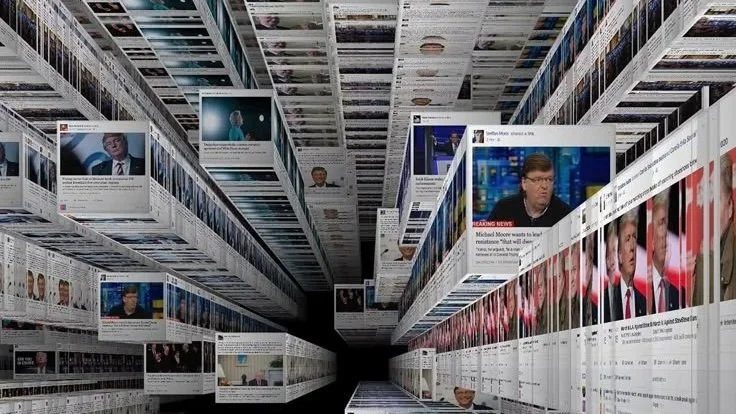
Audiences are spreading across platforms, creators, communities, and devices. The result is not simply a harder media market, but a structural shift in which attention is becoming one of the digital economy’s most scarce and valuable resources.
For most of the twentieth century, mass media was built around concentration. A relatively small collection of television networks, newspapers, radio stations, and magazines gathered enormous audiences, giving advertisers, politicians, and cultural institutions a predictable way to reach the public. Distribution was expensive and limited, which made access valuable and gave the organizations controlling it considerable economic and cultural power. Millions of people also encountered many of the same stories, advertisements, personalities, and entertainment because there were fewer places for their focus to go.
The internet dismantled much of that arrangement. Research from Camp House describes a landscape in which consumers now divide their time among streaming services, social platforms, podcasts, websites, mobile apps, gaming, connected television, newsletters, and creator-led communities. Reaching a large audience therefore requires assembling smaller groups across multiple environments rather than buying access through a few dominant channels. What appears on the surface to be a marketing problem is evidence of a deeper change in the economics of media.
Distribution Became Abundant. Attention Did Not.
The old media business derived much of its power from scarcity. Television had a limited number of channels, newspapers had finite pages, radio depended on constrained frequencies, and building national distribution infrastructure required substantial capital. Digital technology removed many of those barriers, making it possible for almost anyone to publish a newsletter, launch a podcast, upload video, build a community, or distribute commentary globally. The amount of material competing for an audience consequently expanded at a scale the previous system could never support.
But technology did not produce more hours in the day. Human beings still have finite time, cognitive capacity, and willingness to engage, creating an imbalance between an effectively unlimited supply of information and a stubbornly limited capacity to consume it. Every improvement in publishing and distribution adds another potential claimant to that fixed pool. Scarcity has therefore migrated from the ability to publish toward the ability to make someone care.
This is the more useful way to understand fragmentation. The phenomenon is not simply people abandoning television for TikTok, newspapers for newsletters, or radio for podcasts. It is the visible outcome of thousands of businesses, creators, institutions, communities, entertainment products, and algorithms competing simultaneously for the same human resource. Content became abundant; sustained interest became expensive.
Everything Is Now a Media Competitor
Legacy organizations once competed primarily against businesses that looked like themselves. Newspapers competed with other publications, television networks fought over viewers, and radio stations battled for listeners. That boundary has largely disappeared. A news publisher now competes for the same hour of someone's evening as Netflix, YouTube, a group chat, a podcast, a video game, an independent creator, an AI product, or an endless social feed.
That changes the meaning of competition itself. The scarce resource is no longer merely a newspaper subscriber, television viewer, or social-media user; it is a person's available mental bandwidth. Companies from completely different industries can therefore become functional rivals without selling remotely similar products. Once every screen can deliver information, entertainment, commerce, conversation, and work, almost every digital experience enters the same contest.
This helps explain why the consequences extend far beyond advertising. Politics needs awareness before it can persuade voters, journalism needs readership before it can shape public understanding, entertainment needs engagement before it can generate revenue, and commerce increasingly needs an audience before it can produce demand. Capturing interest sits upstream from influence, and influence sits upstream from behavior. Fragmentation therefore redistributes more than advertising dollars; it redistributes power.
From Audience Concentration to Audience Dilution
Camp House frames fragmentation partly through the growing difficulty marketers face when trying to reach consumers across numerous channels. Instead of buying a small number of placements capable of delivering mass exposure, organizations increasingly have to reconstruct an audience across disconnected environments. That process adds complexity and can make exposure more costly and difficult to coordinate. The larger implication is that institutions built for concentrated audiences are being forced to operate inside a system designed around dispersed ones.
This is audience dilution rather than simple migration. People did not collectively leave one centralized system and enter another; they scattered into overlapping networks organized around interests, personalities, formats, algorithms, and communities. That makes the old assumption that reach automatically produces influence increasingly unreliable. A large but indifferent following can be less commercially meaningful than a smaller group that repeatedly listens, buys, shares, subscribes, or participates.
The shift helps explain why relevance, affinity, and trust are becoming more important alongside raw scale. A creator with 50,000 deeply engaged followers may command meaningful influence without resembling a traditional media company at all. A niche publication can build a durable business without pursuing a mass-market audience, while a community can generate economic activity precisely because its members feel connected rather than merely exposed. The important question is becoming less about how many people saw something and more about what happened after they saw it.
Why Direct Relationships Are Becoming More Valuable
For decades, businesses could effectively rent access to someone else's audience. Advertisers bought space from publishers, brands paid networks for airtime, and companies later purchased impressions through social platforms and search engines. That model still works, but fragmentation makes dependence on intermediaries more vulnerable because every additional channel introduces another algorithm, auction, platform rule, or competitor. When rented exposure becomes harder to secure efficiently, owning a direct relationship becomes more valuable.
Newsletters, memberships, subscriptions, communities, podcasts, and creator-led businesses all fit within this logic. Their advantage is not simply that they represent newer formats; they can reduce the distance between the publisher and the people paying attention. An email subscriber, paying member, repeat customer, or active community participant represents a relationship that can potentially survive changes in recommendation systems and advertising markets. Audience ownership is becoming a form of resilience.
This is one structural reason the creator economy matters. Creators are benefiting not only from cheaper production tools but from the weakening of institutional control over distribution itself. Individuals can now assemble meaningful networks without first obtaining permission from broadcasters, publishers, record labels, or other traditional gatekeepers. Fragmentation creates more competition, but it also creates more openings for smaller participants capable of earning trust.
The Larger Shift Is About Power
Media fragmentation belongs to a broader movement away from centralized cultural authority. Consumers increasingly assemble their own information environments from creators, communities, publications, algorithms, friends, experts, and entertainment sources rather than relying on a common set of institutions. Expertise has become easier to challenge, communities can form without geographic proximity, and influence can emerge from networks that would have been nearly invisible under the mass-media model. The same infrastructure that multiplied content also multiplied the number of people capable of shaping public conversation.
That redistribution creates opportunity and instability at the same time. Creators gain access to markets previously controlled by institutions, while platforms gain enormous leverage by organizing the discovery systems through which fragmented audiences navigate abundance. Consumers receive unprecedented choice but must process more competing claims on their time, identity, money, and worldview. Legacy organizations, meanwhile, lose some of the structural advantage that came from being among the few entities capable of reaching everyone.
This is why the underlying issue is bigger than whether advertisers need to buy campaigns on more platforms. The old model connected scarcity of distribution with concentration of institutional power. The emerging one connects abundance of distribution with scarcity of attention, creating a different set of winners, intermediaries, and dependencies. Whoever can consistently earn and retain focus gains leverage in a system where publishing itself is no longer rare.
What Is Signal and What Is Noise?
Individual platforms will rise and fall, formats will cycle through periods of popularity, and marketers will continue chasing whatever environment appears to be gaining momentum. Those movements are often noise. The more important signal is the persistent increase in competition for a finite amount of human time as the number of possible media experiences keeps expanding. That dynamic remains even when the dominant apps, devices, and companies change.
For builders and creators, this suggests that distribution alone is an increasingly weak moat. A viral post can produce temporary exposure without creating a durable relationship, while a smaller but trusted network can generate recurring attention without depending entirely on constant algorithmic discovery. The strategic assets worth watching are therefore direct distribution, community depth, repeat engagement, recognizable identity, and trust. These are mechanisms for retaining attention rather than continually purchasing or reacquiring it.
The fear underneath the fragmentation debate is ultimately a loss of predictability. Brands fear that reaching consumers will become less efficient, publishers fear losing habitual audiences, and established institutions face a world in which influence can no longer be assumed from their position alone. Platforms, creators, niche publications, and community-driven businesses can benefit from that disruption because dispersed focus creates room for new intermediaries. The central contest is no longer simply over who can produce information, but who can become worth returning to.
Attention Is Becoming Infrastructure
Calling media fragmentation an attention crisis misses what is actually changing. A crisis implies a temporary disruption that can eventually be corrected, while the underlying economics point toward something more permanent. Digital technology dramatically lowered the cost of producing and distributing information without expanding the human capacity available to absorb it. That mismatch is turning sustained interest into a scarce economic input.
For creators, businesses, and media organizations, the implication is significant. The strongest position may not belong to whoever publishes the most material, buys the most impressions, or accumulates the largest nominal following, but to whoever builds relationships strong enough to earn repeated voluntary attention. Reach can be rented, algorithms can change, and platforms can disappear. Trust and direct connection are harder to manufacture, which is precisely why they are becoming more valuable.
Media fragmentation is therefore not simply breaking audiences apart. It is exposing the economic structure underneath modern digital culture: information is cheap, distribution is abundant, and human attention remains limited. The organizations that understand that distinction will treat focus not as a byproduct of media, but as infrastructure. In an economy overflowing with things to watch, read, hear, buy, and believe, being consistently worth someone's time may be one of the most defensible advantages left.