
Bitcoin and XRP Are No Longer Competing for the Same Future

The debate over which cryptocurrency will outperform misses a larger reality. Bitcoin and XRP increasingly represent two entirely different visions of how digital finance evolves.
Crypto investors tended to evaluate digital assets through a relatively simple framework. The primary question was whether cryptocurrency as a category would succeed or fail. Bitcoin, Ethereum, XRP, and thousands of other tokens were often grouped together as part of a wider speculative asset class competing against traditional finance.
As the industry matures, that framework is becoming less useful. Increasingly, the most important distinction is not between crypto and traditional finance, but between different visions of what role crypto ultimately plays within the financial system itself. The comparison between Bitcoin and XRP illustrates this change particularly well because each asset reflects a fundamentally different thesis about the future of money, financial infrastructure, and institutional adoption.
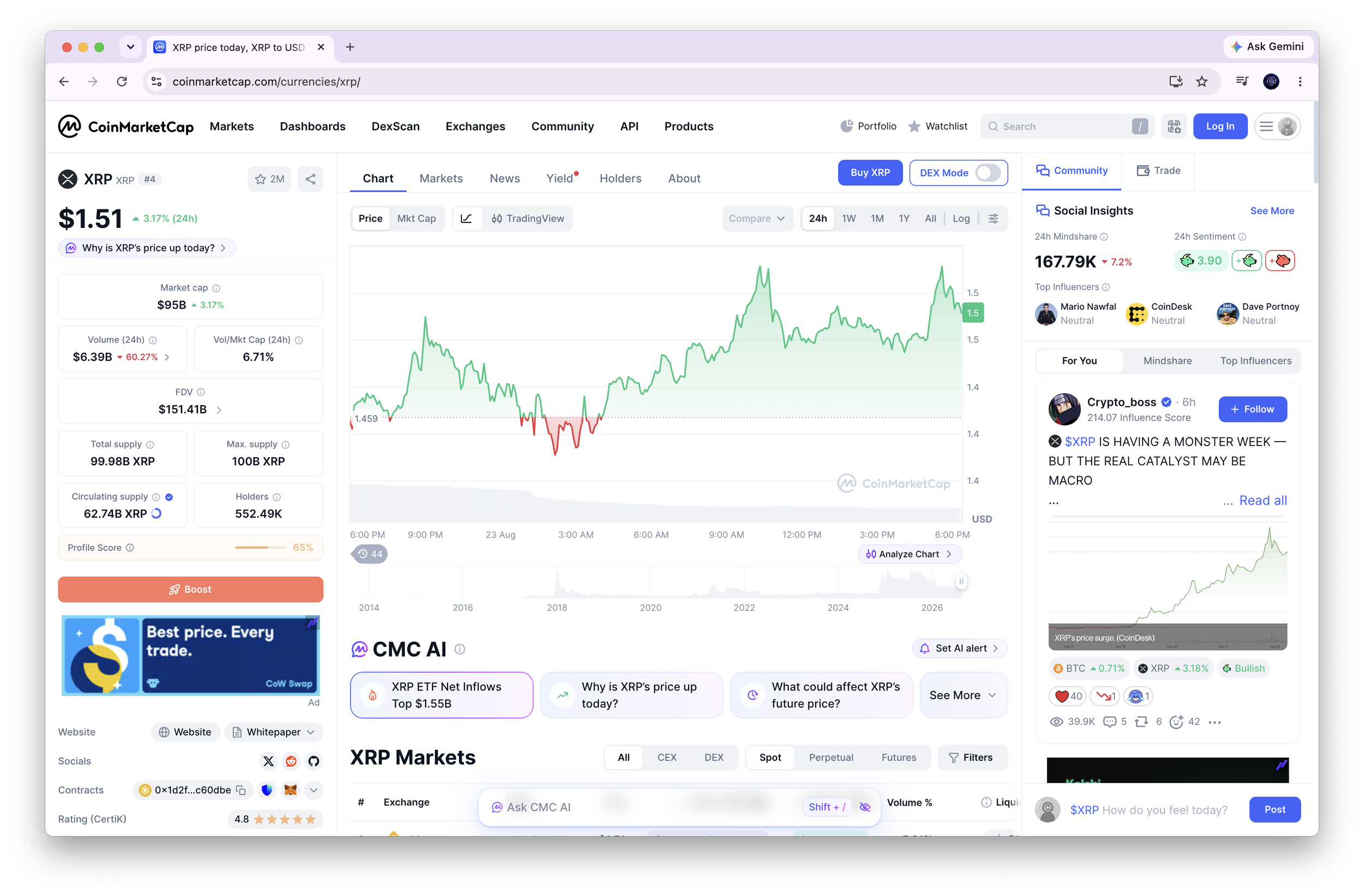
Bitcoin trades at a significantly higher price point while XRP remains far less expensive on a per-token basis. Articles comparing potential returns often focus on how many tokens an investor can accumulate with a fixed amount of capital and whether XRP's lower price creates greater upside potential. While those discussions generate attention, they often obscure the more important dynamics driving long-term adoption. (247wallst.com)
What problem each network is attempting to solve? Bitcoin was created in response to concerns about monetary policy, currency debasement, and centralized control over money. Its value proposition rests on scarcity, decentralization, and predictability. Supporters view Bitcoin as a digital store of value that operates independently of governments, central banks, and financial institutions. In that sense, Bitcoin is often less about payments and more about ownership. Investors are not simply purchasing exposure to technology. They are purchasing exposure to an alternative monetary system.
XRP emerged from a different philosophy. Rather than replacing existing financial infrastructure, Ripple's ecosystem was designed to improve it. The project's primary focus has been reducing friction within cross-border payments, settlement systems, and institutional financial networks. While Bitcoin's narrative often revolves around independence from traditional finance, XRP's narrative centers on integration with traditional finance. The distinction may seem subtle, but it leads to very different adoption pathways.
This divergence reveals an important evolution taking place across the crypto industry. The first phase of cryptocurrency was largely defined by opposition. Crypto positioned itself against banks, against payment networks, against central banks, and against existing financial institutions. Many early adopters viewed decentralization itself as the primary objective.
The current phase appears increasingly focused on integration. Major asset managers now offer Bitcoin exchange-traded funds. Banks are exploring tokenization initiatives. Payment providers are experimenting with blockchain settlement. Governments are developing digital asset frameworks. Rather than replacing traditional financial systems outright, much of the industry is attempting to connect with them.
This change helps explain why assets like Bitcoin and XRP are increasingly attracting different types of investors.
Bitcoin has benefited from institutional adoption because it offers something familiar. Investors understand scarcity. They understand reserve assets. They understand portfolio diversification. Bitcoin's emergence as a digital store of value allows institutions to fit it into existing frameworks without fundamentally changing how financial markets operate.
XRP represents a different type of opportunity. Its long-term success depends less on scarcity and more on utility. The investment thesis is tied to whether financial institutions adopt blockchain-based settlement infrastructure, whether payment networks modernize, and whether Ripple's ecosystem becomes embedded within global financial flows. Investors purchasing XRP are effectively making a wager on infrastructure adoption rather than monetary transformation.
This difference highlights one of the most misunderstood aspects of the crypto market. Not all digital assets derive value from the same source. Some assets are valued based on scarcity. Some are valued based on network effects. Some are valued based on utility. Some are valued based on speculation. Understanding these differences becomes increasingly important as the industry matures and institutional capital plays a larger role in determining market outcomes.
The general market environment reinforces this trend. For years, crypto markets moved largely in unison because investors viewed the industry as a single high-risk category. As adoption increases, differentiation becomes more important. The market increasingly rewards projects based on specific use cases, regulatory clarity, institutional relationships, and real-world utility rather than simply benefiting from general enthusiasm for digital assets.
This is one reason why debates centered solely on price targets often miss the larger story. Price reflects expectations. Those expectations are ultimately tied to narratives about the future. Bitcoin's narrative revolves around digital scarcity. XRP's narrative revolves around financial infrastructure. Both narratives can succeed simultaneously because they address different problems. The more interesting question is what type of future investors believe is most likely.
What Are They Actually Saying?
When analysts compare Bitcoin and XRP, they often present it as a choice between two investments. Beneath that comparison sits a larger debate about the future of finance itself. Bitcoin represents a bet that scarcity and monetary independence become increasingly valuable. XRP represents a bet that blockchain technology becomes embedded within existing financial systems.
What Fear Is Driving This?
The fear driving Bitcoin adoption remains rooted in concerns about monetary instability, inflation, and centralized control over money. The fear driving XRP adoption is different. It reflects concerns that existing financial infrastructure is inefficient, expensive, and increasingly outdated in a digital world.
Who Benefits If This Narrative Spreads?
Bitcoin benefits because institutional investors increasingly view it as a legitimate store of value. Ripple benefits because financial institutions become more open to blockchain-based settlement systems. Traditional financial firms also benefit because integration narratives create opportunities to modernize infrastructure without abandoning existing institutions.
Signal Or Noise?
Daily price movements are noise. The signal is that crypto assets are increasingly being evaluated based on their specific economic functions rather than being treated as a single speculative category. That shift reflects a maturing market and a more sophisticated investor base.
What Should Builders Pay Attention To?
The most important trend is not which asset generates higher returns over the next cycle. The more important trend is that digital assets are becoming specialized. Builders should pay attention to where real utility emerges, where institutions are deploying capital, and where regulatory frameworks create pathways for adoption.
The crypto industry's future may not belong to a single winner. It may belong to multiple networks serving entirely different functions within a broader digital financial system. The Bitcoin versus XRP debate is often framed as a competition.
Crypto is evolving from an ideological movement into a collection of competing infrastructure layers, each attempting to solve different problems. As that transition accelerates, the question will become less about which token people own and more about which systems the global economy chooses to adopt.