

More than 340 local news outlets are restricting the Internet Archive's ability to preserve their journalism. The immediate concern is AI scraping. The larger question is what happens when protecting content begins to conflict with preserving history.
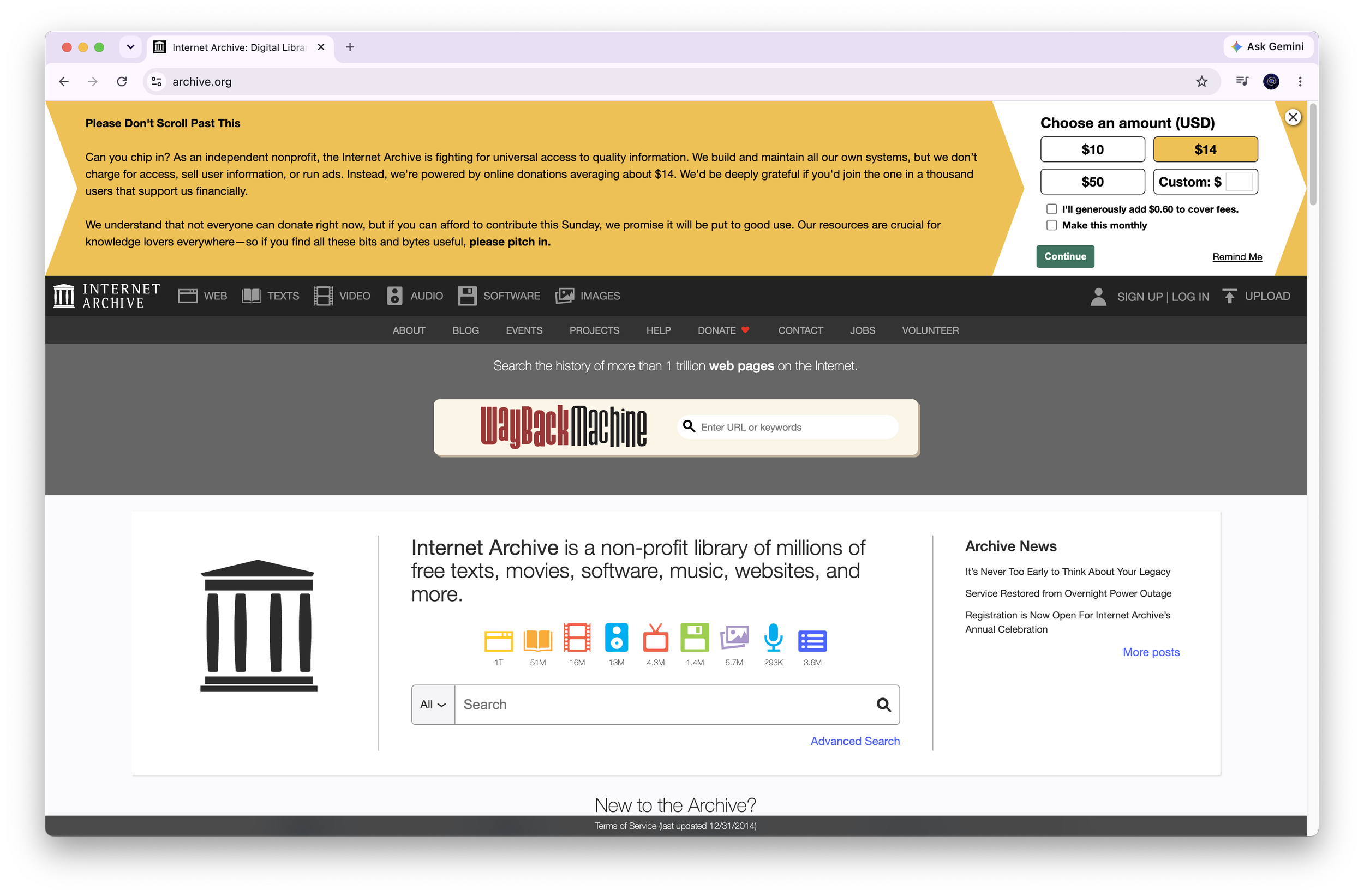
Throughout the internet's existence, digital preservation was treated as a largely invisible public service. The average reader rarely thought about how old articles remained accessible years after publication. Journalists searching for deleted webpages, researchers tracing historical events, lawyers verifying claims, and historians documenting cultural shifts often relied on the same resource without giving it much consideration. The Internet Archive's Wayback Machine quietly became one of the most important preservation projects of the digital era, capturing snapshots of the web and creating a historical record of information that would otherwise disappear.
Today, that system is facing growing resistance. According to a recent Nieman Lab analysis, more than 340 local news sites across the United States are now limiting the Internet Archive's ability to access and preserve their reporting. Many of the affected outlets belong to some of the largest newspaper chains in the country, including publishers owned by Alden Global Capital, McClatchy, Advance Local, and USA Today Co. What began earlier this year as a small number of publishers restricting access has expanded into a much broader movement across local journalism.
News organizations are increasingly concerned that AI companies may use archived content as a backdoor for training large language models. Even if publishers block AI crawlers directly, archived versions of their content stored elsewhere could potentially become accessible to companies seeking large volumes of text data. As generative AI systems become more valuable, publishers are becoming more aggressive about protecting intellectual property and limiting unauthorized use of their journalism.
Over the past several years, news organizations have watched AI companies build multibillion-dollar businesses using vast quantities of internet content while questions surrounding compensation, licensing, and copyright remain unresolved. Publishers have legitimate reasons to question whether years of reporting should become free training material for systems that may eventually compete with them for audience attention, search traffic, and advertising revenue. Yet the conflict becomes more complicated when viewed beyond the lens of intellectual property.
The Internet Archive is not merely a storage system. It functions as a form of digital memory infrastructure. Unlike traditional libraries, which preserve physical documents, the Wayback Machine preserves web pages that can be edited, deleted, paywalled, or disappear entirely. In an environment where news organizations close, websites are redesigned, articles are updated, and ownership changes hands regularly, preservation often becomes the only mechanism that allows future researchers to reconstruct what happened. That role is particularly important for local journalism.
Many local news organizations already operate under severe financial pressure. Some have closed entirely. Others have reduced coverage, merged operations, or been acquired by larger chains. In many communities, the local newspaper may represent one of the only consistent records of public meetings, local elections, school board decisions, zoning disputes, and civic life. When those records disappear, the historical memory of entire communities can disappear alongside them.
This is why journalism librarians, historians, and reporters have expressed concern about the growing restrictions. As journalism librarian Edward McCain told Nieman Lab, blocking the Internet Archive threatens one of the most effective systems currently available for capturing and preserving news content over the long term. He warned that while temporary workarounds may exist today, weakening preservation infrastructure ultimately damages the primary source material future generations will rely upon to understand the past.
This reveals a paradox emerging throughout the information economy. The same AI systems causing publishers to become more protective are also exposing how dependent society has become on open archives. For decades, the internet operated under assumptions of abundance. Information could be copied, indexed, archived, linked, and redistributed with relatively little concern. Search engines benefited from crawling content. Archives benefited from preserving it. Researchers benefited from accessing it. The web evolved around openness as a foundational principle. Artificial intelligence is beginning to challenge that model.
As information becomes valuable not simply for human consumption but as training material for machine intelligence, content owners are reevaluating old assumptions about access. Archives that once appeared purely beneficial are now being viewed through the lens of extraction. The question is no longer whether information should be preserved. The question is who should be allowed to access preserved information and under what conditions. This creates a difficult tradeoff.
Publishers are attempting to protect the economic value of their work at precisely the moment when public preservation has become more important than ever. The challenge is that preservation and protection are increasingly pulling in opposite directions. Systems designed to maximize openness become vulnerable to exploitation. Systems designed to maximize control can undermine public access. The result is a growing conflict between two legitimate goals that previously coexisted without much friction. One side seeks to preserve journalism. The other seeks to protect it.
What makes this situation particularly significant is that there is no obvious replacement for the Internet Archive. Journalists routinely use archived webpages to verify claims, track changes to public statements, investigate deleted content, and reconstruct timelines. Researchers rely on archives to study social movements, political campaigns, and cultural trends. Local reporters often use archived articles from newspapers that no longer exist. Without preservation systems, significant portions of the internet's historical record become substantially harder to access.
Across the digital economy, institutions are beginning to close systems that were once open. APIs are becoming restricted. Platforms are limiting access to data. Content owners are erecting new barriers around information. Much of this is a direct response to artificial intelligence and the growing realization that data itself has become a strategic asset. What appears to be a technical dispute over web crawlers is therefore part of a much larger challenge.
The internet is moving from an era of open indexing to an era of controlled access. For years, information was valuable because people consumed it. Increasingly, information is valuable because machines consume it. That changes the incentives governing the web.
The Nieman Lab reporting points toward a deeper question that extends beyond publishers, archives, or AI companies. If the internet increasingly fragments into protected silos designed to prevent extraction, what happens to the institutions responsible for preserving collective memory? The answer matters because societies do not simply need information in the present. They need systems capable of preserving information for the future.
What Are They Actually Saying?
Publishers argue they are protecting their intellectual property from unauthorized AI training. Beneath that concern lies a broader struggle over ownership, control, and compensation in an economy where information itself has become raw material for machine learning systems.
What Fear Is Driving This?
The immediate fear is that AI companies will continue extracting economic value from journalism without paying for it. The longer-term fear is that publishers will lose control over the assets that make their reporting economically viable in the first place.
Who Benefits If This Narrative Spreads?
Publishers benefit by strengthening their negotiating position against AI companies. Technology firms benefit if access restrictions remain fragmented and inconsistent. The public benefits when journalism remains economically sustainable, but the public also benefits when historical records remain accessible. The challenge is that these interests are no longer perfectly aligned.
Signal or Noise?
The decision by a single publisher to block the Internet Archive is noise. Hundreds of local news organizations simultaneously restricting preservation systems because of AI concerns is a signal. That trend suggests the internet's relationship with openness, archiving, and public memory is being fundamentally renegotiated.
What Should Builders Pay Attention To?
The long-term opportunity may not involve choosing between preservation and protection. It may involve creating systems that allow both. The organizations that succeed in the next phase of the information economy will likely be those capable of balancing creator rights, economic sustainability, archival preservation, and public access without sacrificing one entirely for the other.
The fight over the Internet Archive is often framed as a copyright dispute. In reality, it is a debate about something much larger: whether the historical record remains a public resource in an age when information has become one of the world's most valuable commodities.